Coverage & eligibility
Service area & load eligibility
Capital Site Logistics arranges freight nationwide with authorized carriers — material from suppliers, warehouses, fab shops, and other jobsites to active sites, plus qualified general freight and other commercial loads. Headquartered in Tampa Bay, that is where the construction roots run deepest, but coverage for a specific run is determined per load, not promised by a city list.
How far we run
Three tiers of coverage
Runs are arranged nationwide with an authorized carrier matched to the lane. Tampa Bay is the home base, Florida is regular range, and the rest of the country is quoted lane by lane — and what each tier means for timing is different.
Tampa Bay
Home market
Hillsborough, Pinellas, Pasco and Polk counties — where dispatch is based and where most runs happen.
Florida
Statewide pickup & delivery
Pickups and deliveries elsewhere in Florida — the I-4, I-75 and I-95 corridors, Orlando, Jacksonville, Sarasota, Fort Myers, Naples, Ocala and Gainesville.
Nationwide
Quote-qualified long-haul
Runs beyond Florida are quoted anywhere in the U.S., evaluated case by case against the load, the route, the timing and available capacity.
Same-day and expedited runs are a Tampa Bay service — outside the home market, timing is set by distance and confirmed when the run is quoted, not promised in advance.
The home market
Centered on Tampa Bay
These are the counties the work is centered on. Whether a particular pickup and delivery pair can be served still depends on the load and the timing — that is confirmed when we quote it, not assumed here.
- Hillsborough County
- Tampa, Brandon, Riverview, Plant City
- Pinellas County
- St. Petersburg, Clearwater, Largo
- Pasco County
- Wesley Chapel, New Port Richey, Land O' Lakes
- Polk County
- Lakeland, Winter Haven
Outside these counties, the rest of Florida is served the same way — a longer run, planned around drive time and the receiving window rather than treated as an exception. Lanes beyond Florida are the ones weighed case by case, against the load, the route, the timing and available capacity.

Not sure a run that far out is workable?
Cargo eligibility
More than construction freight
Construction logistics is our specialty, not our limit. Businesses can request transportation for palletized freight, equipment, fixtures, inventory, supplier transfers, and other commercial loads. Eligibility is confirmed based on the cargo, dimensions, weight, route, timing, loading requirements, and destination access.
The specialty
- Supplier & will-call pickups to the jobsite
- Warehouse-to-jobsite material runs
- Site-to-site material transfers
- Contractor tools & equipment moves
- Scheduled and expedited jobsite delivery
General contractors, subcontractors, suppliers, distributors and jobsite teams are the primary customers, and the questions a run gets planned around — release times, gate access, staging by sequence — come from that kind of work.
Also quoted
- Palletized commercial freight
- Business equipment
- Fixtures, displays & commercial inventory
- Supplier & warehouse transfers
- Machinery components
Your load does not have to be construction-related. Send the details and we will tell you whether it is something we can run. Standard freight handling only, quoted against the same criteria as a construction run.
Audiovisual companies are a served vertical too: CSL coordinates transportation for audiovisual equipment — warehouse to venue, venue to venue, and the return run — quoted the same way, quote-qualified per run.
CSL also coordinates equipment rental transportation — yard to jobsite and back — and commercial installation & FF&E logistics for fixtures, displays and rollout freight, quoted per run.
Out of scope
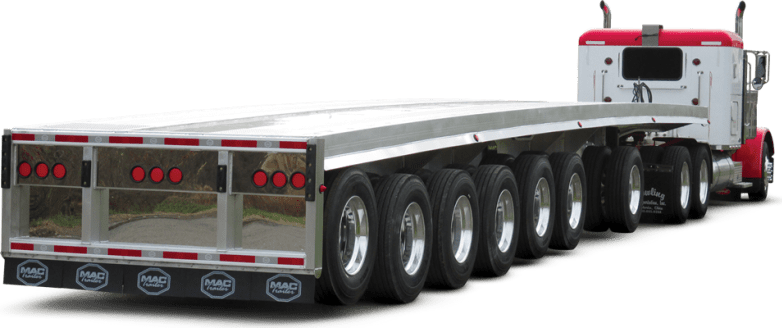
Some freight needs equipment, permits, or regulatory authority we do not hold, and we would rather say so here than after you have planned around us. Not handled: hazardous or otherwise regulated materials; refrigerated or temperature-controlled freight; oversized or overweight permit loads; heavy machinery needing heavy-haul, crane or rigging; high-value cargo needing secured transport; household or residential moves; waste or debris hauling; automobiles; live animals. If a load is borderline, it gets flagged during quoting rather than after.
Not sure your load qualifies? Send it and we'll tell you.
How coverage is determined
What we need to know to confirm a run
Five things decide whether a delivery is something we can take and what it costs. Have these ready and a quote is quick.
- Where the pickup is
- Supplier, warehouse, fabrication shop, yard, or another jobsite. Distance and drive time between the origin and the site shape both feasibility and cost.
- Where it is going
- The delivery address — a jobsite, a warehouse, a business, or another supplier — plus anything that affects getting a truck in: gate or badge requirements, receiving hours, laydown area, and where the load can actually be set down.
- What is moving
- Dimensions, weight, and how the load is packaged — palletized, bundled, crated, or loose — determine which vehicle fits. Estimates are fine at this stage; length and weight limits matter more than piece count.
- How it loads and unloads
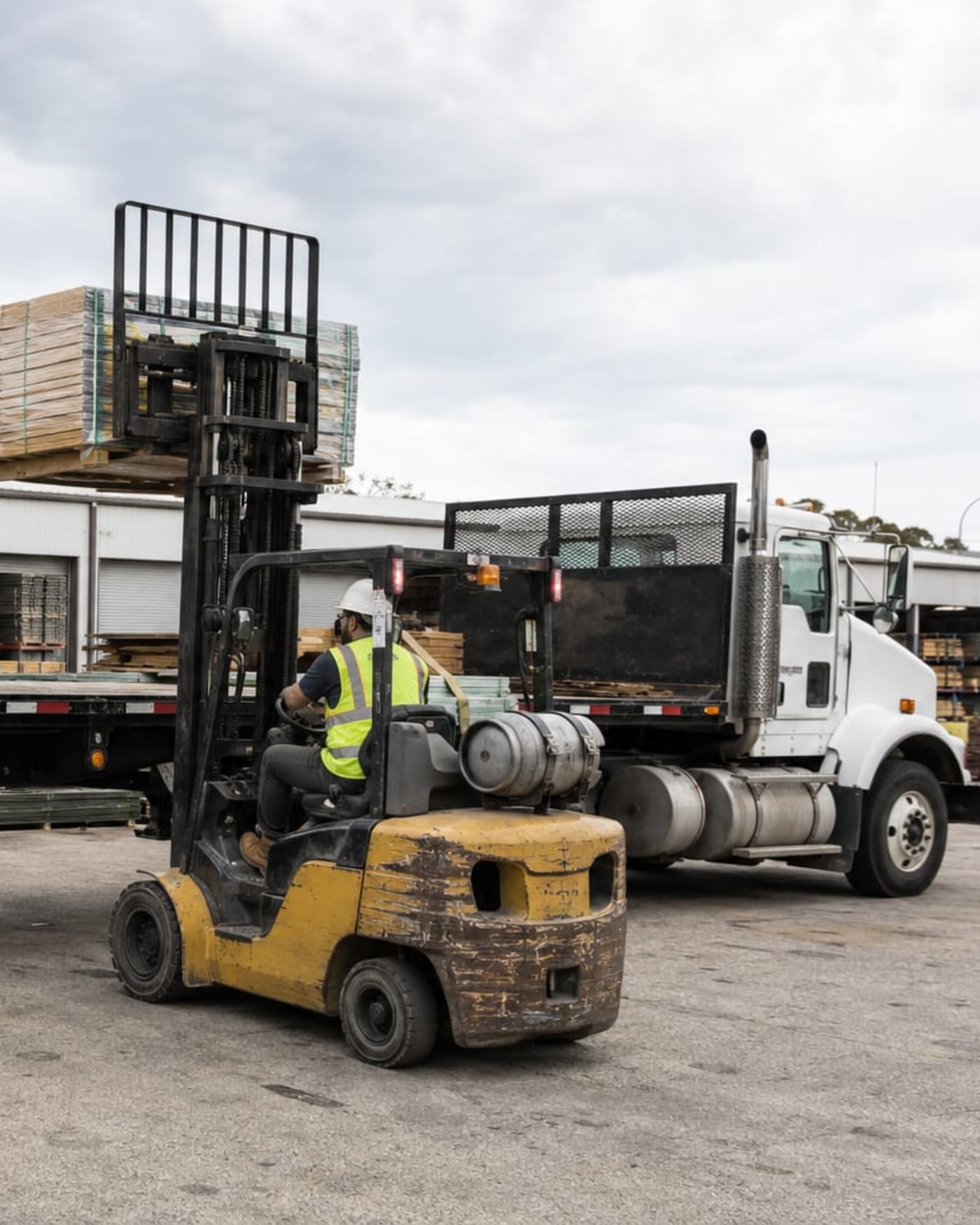
- Whether there is a dock or forklift at each end, whether a liftgate is needed, or whether it is a hand load. Handling at both ends affects scheduling as much as distance.
- When it needs to happen
- A delivery planned around a project schedule and a run that has to move the same day are different problems. Timing is confirmed when the request is quoted.
Services
What we run in the area
Every service below is available across the tiers above, quoted the same way — nationwide coordination first, then the Tampa Bay catalogue.
Nationwide
Coordinated lane by lane with an authorized carrier, anywhere in the U.S.
Tampa Bay
The home-market catalogue — the flagship hubs and every construction spoke.
Request a Quote
Tell us the pickup and the destination.
Send the origin, the destination, what is moving, and when you need it — construction material or general freight. We will confirm whether we can cover the run and what it costs.
Free, no-obligation quotes · Nationwide